
Tear resistance of coated fabrics according to ISO 4674-2:2021
ISO 4674-2:2021
Principle
This method determines the tear resistance of rubber- or plastics-coated fabrics using a ballistic pendulum. A cut or pre-notched specimen is subjected to a tearing force delivered by a pendulum with a known mass and energy. The energy required to continue the tear is measured based on the loss of kinetic energy of the pendulum after impact.
This test simulates how a tear might propagate under dynamic impact conditions, as opposed to steady-state loading.
Test method
1. Sample Preparation
- Specimens are cut to a standard shape and size with a pre-cut slit or notch.
- The coated fabric should be conditioned (e.g. 24h at 23 °C and 50% RH).
- Specimens may be tested in both warp and weft directions.
2. Pendulum Setup
- A ballistic pendulum calibrated with known energy is used.
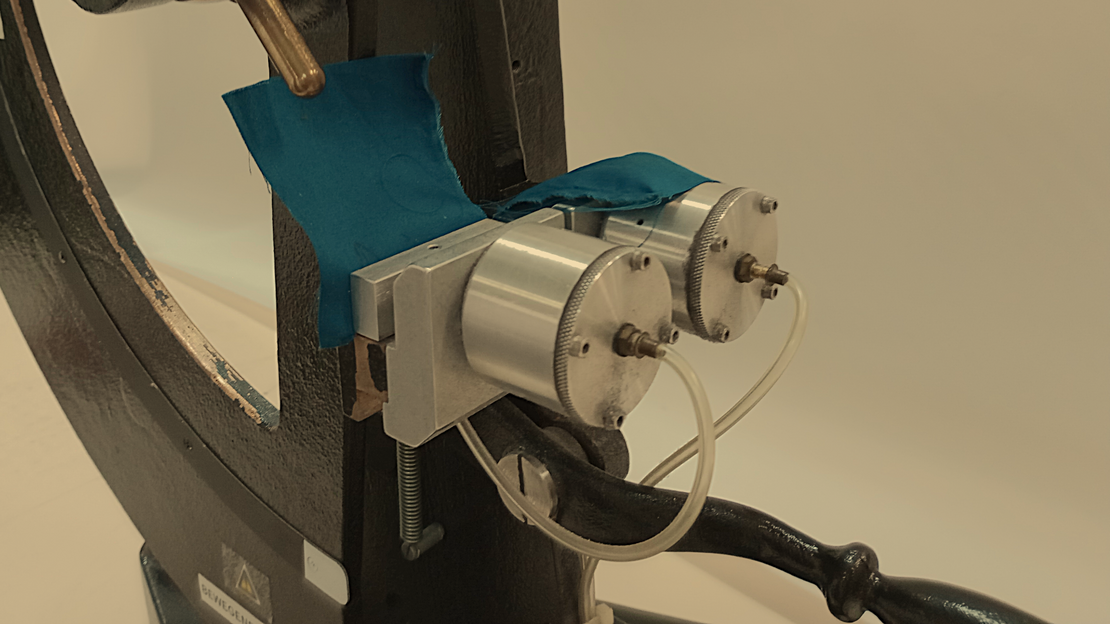
- The specimen is clamped between fixed and movable grips.
- The pendulum is released from a specific height to initiate and propagate the tear through the specimen.
3. Measurement
- The pendulum swings and tears the sample, losing energy as it does.
- The maximum arc or energy absorbed is recorded.
- The tear resistance is calculated in N or mJ, based on the energy absorbed to propagate the tear.
4. Repeat & Average
- Multiple tests (usually 5–10) are performed.
- The average tear resistance is reported, along with individual results if required.

Test Setup
The ballistic pendulum apparatus used in this method typically consists of:
- Pendulum Arm: A rigid arm with a known mass and length, capable of swinging freely.
- Specimen Clamps: Fixtures to securely hold the notched fabric specimen in place.
- Release Mechanism: A device to release the pendulum from a predetermined height, ensuring consistent energy application.
- Scale or Sensor: To measure the pendulum's swing before and after tearing the specimen, allowing calculation of energy absorbed during the tear.
The test involves releasing the pendulum so that it impacts the notched specimen, causing it to tear. The energy absorbed in propagating the tear is determined by the difference in the pendulum's potential energy before and after the tear.
Reporting
- Tear resistance (N or mJ)
- Direction of testing (warp/weft)
- Type of coating and fabric
- Environmental conditions (temperature, humidity)
- Number of replicates and any anomalies

- Part 2 uses a dynamic method (impact-based), unlike ISO 4674-1, which uses a tensile testing machine.
- Particularly suited for coated fabrics where initial tearing is less relevant than propagation behavior.
- Important for applications such as tents, tarpaulins, or protective gear.
Specific Testing Conditions

Specific conditions concerning our testing reports