
Detecting PFAS with Combustion Ion Chromatography (CIC)
ISO CD 20999 (under preparation)
What are PFAS?
PFAS are man-made chemicals widely used since the 1960s in textiles, packaging, plastics, electronics, and automotive products. They are often called “forever chemicals” because they resist heat, water, oil, and stains — and they do not break down easily in the environment.
Some PFAS are linked to health and environmental risks. As a result, they are increasingly regulated in Europe and globally, with stricter limits expected in the coming years.
Why PFAS Monitoring Is Challenging
- There are thousands of different PFAS substances
- Testing each one individually is expensive and time-consuming
- Many PFAS exist in very small amounts
- Some PFAS are unknown or difficult to identify
This is especially important for:
- Textile recycling
- Plastic recycling
- Packaging waste
- Wastewater treatment
- Polymer production

What Is Combustion Ion Chromatography (CIC)?
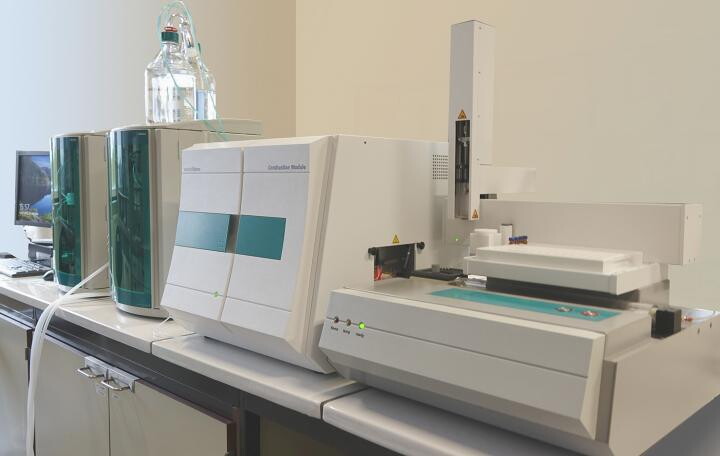
CIC is a screening method that measures the total fluorine content in a material.
Instead of identifying individual PFAS chemicals, it answers a practical question: “How much fluorine — and therefore possible PFAS — is in this material?”
How CIC Works?
The Sample Is Burned
- The material (textile, plastic, pellets, powders, laminates, etc.) is placed in a furnace at about 1050°C.
- No complex chemical preparation is required.
PFAS Are Broken Down
- The high temperature destroys PFAS completely.
- All fluorine in the sample is converted into fluoride.
Fluoride Is Measured
The fluoride formed during combustion is collected in an absorption solution and measured using ion chromatography.
The result shows:
- Total Fluorine (TF) – all fluorine in the sample
- or Extractable Organic Fluorine (EOF) – mainly fluorine from organic compounds such as PFAS
A little bit of caution is always due!
CIC is a specific analytical method. If no fluorine is detected, you can be confident that the material does not contain any PFAS compounds. However, if fluorine is detected, this does not necessarily mean it originates from PFAS. It could also be harmless inorganic fluorine naturally present in the sample.
Other techniques in our laboratory, such as Prolysis can help identitying the substance.
Valuable Testing Method for the Industry
PFAS in recycled materials may be:
- Textile finishing agents
- Polymer-bound PFAS
- Fluoropolymer residues
- Unknown or new PFAS
- Degradation products
- Non-extractable PFAS
Many of these cannot be measured individually with conventional methods.
CIC provides a robust total screening tool for:
- Checking recycled materials for PFAS contamination
- Supporting compliance with REACH / ECHA restrictions
- Quality control of incoming waste streams
- Verifying PFAS removal after treatment

Key Takeaway
CIC detects PFAS by:
- Burning the material at high temperature
- Converting all fluorine into measurable fluoride
- Measuring that fluoride
It is a practical, reliable method to screen complex materials for total PFAS contamination — especially in recycling and industrial applications.