
Thermo-physiological Comfort according to ISO EN 11092 and ISO EN 15831
ISO EN 11092, ISO EN 15831, EN 14058, EN 511,
ASTM F2370, ASTM F2371

Skin model
The skin model or sweating guarded hotplate is designed to provide accurate measurements of heat and moisture transfer through a flat (single layer) woven or non-woven fabric and simulates the heat and moisture transfer that occurs in the vicinity of human skin.
The test method is described in ISO 11092.

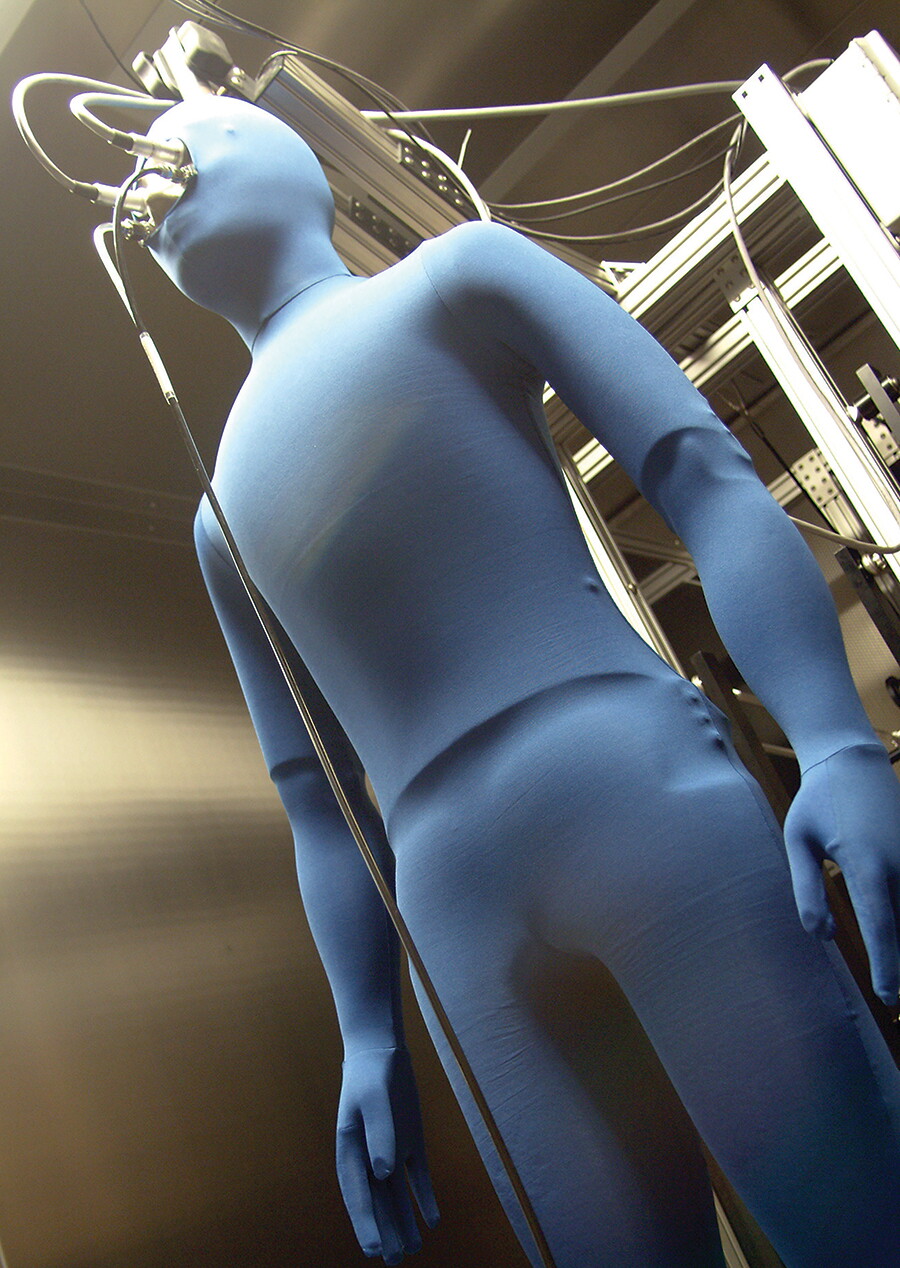
Newton: thermal and sweating manikin
The thermal, sweating and moving manikin allows us to predict the thermo-physiological comfort of an entire garment (or parts of it) in real-life conditions.
The "Newton" manikin consists of a thermally conductive carbon fibre expoxy shell with integrated thermal resistors and sensors.
Thermal features
- thermally conductive Carbon Fiber-Epoxy shell
- standard garment size M
- 26 independent thermal zones
- distributed heating wires and wire sensors for accurate control and measurement of skin temperature to +/- 0.1°C
- water compliant for use with wetted skin
- standard joints at the shoulders, hips, knees, elbows, and ankles
- mannequin walking mechanism (speed variable from 0 to 55 double steps per minute : about 70 meters/min)
Sweating mechanism
- volumetric control of delivered sweat rate, selectable by mannequin region
- network of pores over the mannequin's surface
- removable fabric skin layer for water distribution by wicking

Tests with clothed/masked manikin
ISO 15831: thermal insulation by means of a thermal manikin
ISO 15831 - EN 342: thermal insulation of ensembles and garments for protection against cold
ISO 15831 - EN 14058: thermal insulation of garments for protection against cool environments
ASTM F2370: standard test method for measuring the evaporative resistance of clothing using a sweating manikin
ASTM F2371: standard test method to measure the heat removal rate of personal cooling systems using a sweating heated manikin

Manikin sweating arm
The sweating arms of the thermal manikin are used to :
- simultaneously compare the breathability of different materials under identical conditions
- measure the surface temperature of a thermal sweating arm during simulated exercise and rest phases
- evaluate moisture management properties

EN 511 - Protective gloves against cold
The thermo-physiological comfort of gloves and mittens is assessed by measuring the thermal insulation and water vapour resistance.

Thermal contact test
Measurement of the heat removal from the skin that comes into contact with a fabric.
The thermal contact test is particularly interesting to characterize heat-regulating textiles containing e.g. phase change materials (PCM).

Wicking Assessment
CEN/TR 16422 (skin model) - assessment of liquid sweat transfer and liquid sweat management
Wicking refers to the ability of a fabric to move moisture (sweat) away from the skin to the outer layer of a fabric where it can evaporate more easily, thus helping to keep the skin dry.

Moister Management Tester
AATCC test method 195
To measure the dynamic liquid transport properties, a sample is placed horizontally in the instrument between the upper and lower sensors. These sensors are made of concentric rings of pins. A solution, representing perspiration, is dropped on the center of the upper face (skin side) of the test sample.
As the solution moves through and across the sample, the changes in electrical resistance are measured and recorded.
The comfort of textiles and garments is the result of both psychological aspects (design, fit, quality, aesthetics) and physiological aspects, including thermophysiological and sensorial (softness, suppleness) comfort. Thermophysiological comfort is the result of the heat and moisture transfer through the textile that will regulate the body’s temperature, and is an important feature in clothing and especially in sportswear and professional (protective) clothing.
Centexbel determines the thermal insulation (expressed in Rct) and water vapour permeability (Ret), as well as the moisture management of fabrics and garments.
Specific Testing Conditions

Specific conditions concerning our testing reports
Thermal comfort assessment

Centexbel offers a whole series of tests to assess this important aspect in the development of workwear, sportswear, corporate wear, medical wear, protective and military clothing.